
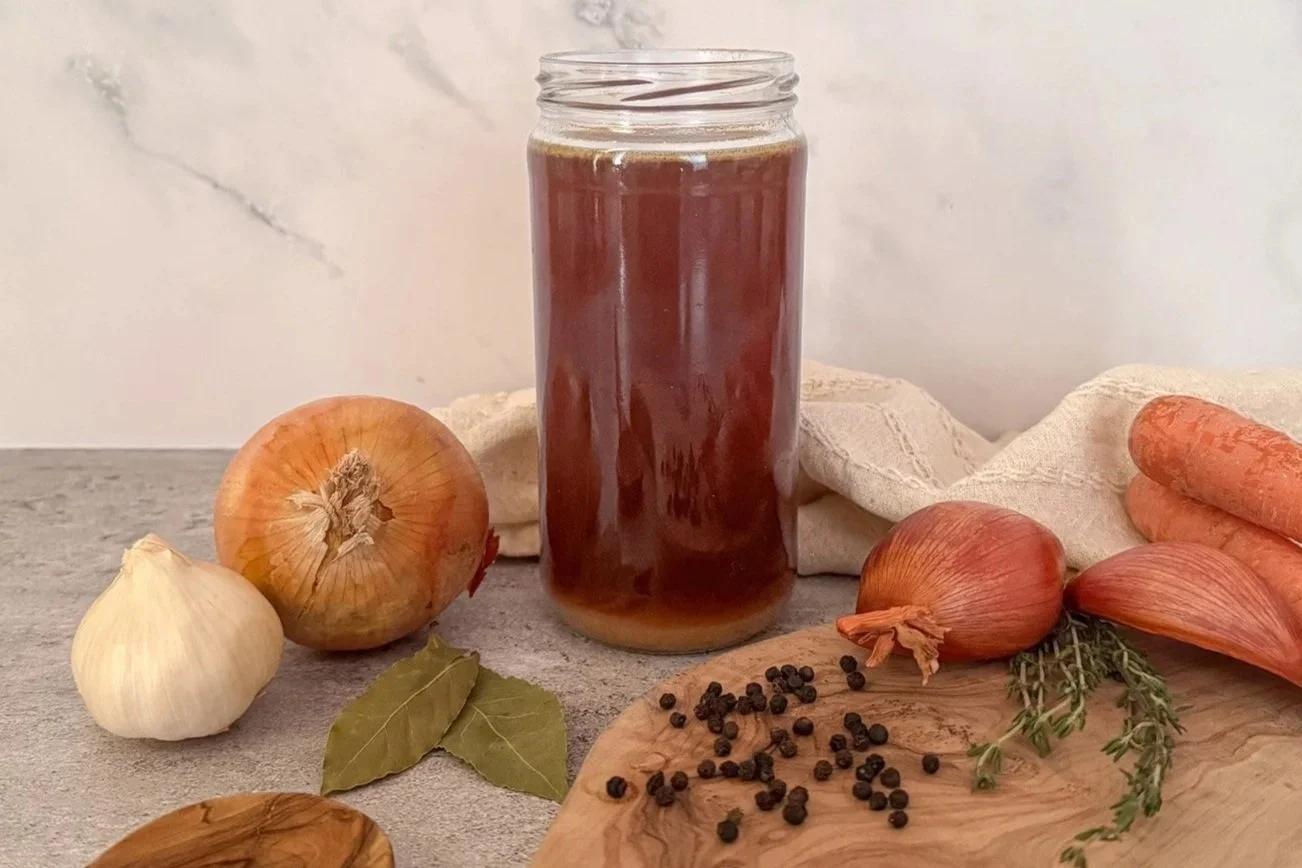
Chicken Bone Broth
Prep Time: 15 minutes
Roasting Time: 40-45 minutes
Slow Cook Time: 12-24 hours
Total Time: About 13-25 hours
Yield: About 6-8 cups
Ingredients
1 cooked chicken carcass
2 carrots, roughly chopped
2 celery stalks, roughly chopped
1 onion, quartered
1 shallot, halved
6–8 garlic cloves, smashed
½ cup dry white wine
2-3 bay leaves
4-6 sprigs fresh thyme
1½ tsp apple cider vinegar
1–2 tsp whole black peppercorns
Water, as needed to cover
Additional vegetables, such as mushrooms, leeks, or whatever you have on hand (I like to use up any leftover veggies)
Salt, to taste (start with 1 ½ tsp) – season at the end
Optional Spices
½-1 tsp ground turmeric
½ tsp ground ginger (or 1 tbsp fresh ginger, sliced)
½ tsp dried rosemary (or 1-2 fresh sprigs)
½ tsp dried sage (or 3-4 fresh leaves)
Equipment
Large sheet pan or roasting pan
Slow cooker
Fine-mesh sieve
Large stock pot (to pour broth into)
Instructions
Preheat the oven to 425°F.
Arrange the chicken carcasses and veggies on a large sheet pan or roasting pan.
Roast for 40–45 minutes, until the bones and vegetables are well browned.
Transfer everything to a large slow cooker.
Pour the white wine onto the hot roasting pan and scrape up any browned bits. Pour the wine and drippings into the slow cooker.
Add the bay leaves, thyme, apple cider vinegar, and peppercorns.
Add enough water to just cover the bones and vegetables, being careful not to exceed your slow cooker's maximum fill line.
Cover and cook on LOW for 12–24 hours.
Strain through a fine-mesh sieve into a large stockpot. For a clearer broth, strain again through cheesecloth.
Season with salt to taste.
Cool before refrigerating or freezing.
Notes
Don't add too much water. Using only enough to cover the bones will give you a richer, more concentrated broth.
For an even richer broth, cook for up to 24 hours on LOW, adding a little water if necessary.
Since the chicken carcasses are already cooked, you don't have to roast them again—the second roasting is specifically for deeper, more roasted flavor.
I’d add salt at the end rather than 1–2 tsp at the beginning. The broth concentrates as it cooks, so it's easier to control the seasoning afterward.
If the chilled broth turns thick or jiggly, that's from the gelatin extracted from the bones and connective tissue. Means it’s good stuff!